
Lancaster County Bench Warrant FTA Rules Vary
South Carolina's 2018 summary-court memo prefers rescheduling after a first failure to appear, in the situations it describes. So a bench warrant there is discretionary. It does not automatically follow every missed date. What matters is your case, the notice you got, the charge, and the exact court order. The memo also covers counsel, bond, and a prompt appearance before a judge or bond judge once an arrest happens. None of that predicts what a Lancaster County judge will order in any particular case. Take the paper you received to the issuing court or a lawyer. A missed date needs a court's answer, not a guess.
Bench Warrants in Lancaster County
Think of a bench warrant as court process tied to something that happened in a case. In Lancaster County, a missed summary-court appearance can trigger bench-warrant process, while a separate form covers trial in absentia. Family Court can issue process for support enforcement, and that carries different record limits than an ordinary public case. People sometimes say "capias" in casual conversation. The word is not a safe substitute for reading the document itself. Ask which court issued the paper and what action it expects from you.
Lancaster County Bench Warrant Forms Differ
South Carolina's forms index lists SCCA523, a bench warrant after failure to appear, and SCCA522, a bench warrant after trial in absentia. Each form shows the court, the underlying matter, the command, the judicial action, service fields, and the return. Remember they are blank forms, not Lancaster County case records. The memo adds that a second missed appearance can bring trial in absentia and a sealed sentence process, and it limits using a bench warrant solely for certain unpaid fines. Only the court can say which procedure applies to you. Read the form title before treating any record as current.
How a Lancaster County Bench Warrant Is Issued
The issuing judge decides whether a missed obligation calls for a bench warrant or some other step. The paper then directs an officer to bring the person before the issuing court or a bond judge, under whatever language that form carries. It may list a court date, a bond direction, or a service jurisdiction. The sheriff or another agency may attempt service. South Carolina Rule 30 requires reasonable efforts to serve bench warrants and reporting on those left unserved. Even so, it creates no public Lancaster status code and no promise that a docket updates on the spot.
Lancaster County FTA Is Not an Arrest Warrant
A bench warrant grows out of a court event, like a missed appearance. An arrest warrant grows out of a sworn complaint and a probable-cause review. Both can authorize custody, yet the reasons, paperwork, and court questions differ. A summons just tells you to appear, and it is not an arrest warrant. The court process and service records can be reviewed separately. The blank forms at the South Carolina Judicial Branch forms page explain the paper, not whether a Lancaster County warrant is still active.
Bench Warrant vs Arrest Warrant
For a Lancaster County case, the difference comes down to what led to the order. A bench warrant follows a missed court obligation. An arrest warrant follows a sworn complaint and a judge's probable-cause review. The court named on the paper controls the next step either way. Read the arrest-warrant process for that separate route.
| Feature | Bench Warrant | Arrest Warrant |
|---|---|---|
| Trigger | Missed appearance or court event | Complaint supported by probable cause |
| Who Issues It | Judge in the case | Magistrate or municipal judge under the law |
| Underlying matter | Existing case or court obligation | Charge or complaint under review |
| Next step | Ask the issuing court about appearance or recall | Confirm charge, bond, and court instructions |
Lancaster City Bench Warrants Have Their Own Route
Lancaster Municipal Court handles city traffic and criminal matters, and it warns that failure to appear or pay can bring a bench warrant or a license suspension. The office sits at 405 East Arch Street. The court lists 803-285-7622. City hours differ from county Magistrate Court, and an ordinary office visit does not always count as a judicial appearance. The city's court page spells out payment, receipt, and appearance instructions. A ticket from Highway Patrol or a county agency may belong somewhere else entirely. Before you pay or ask for a reset, use the court named on the paper.
Read the Lancaster Municipal Court’s resolution instructions.
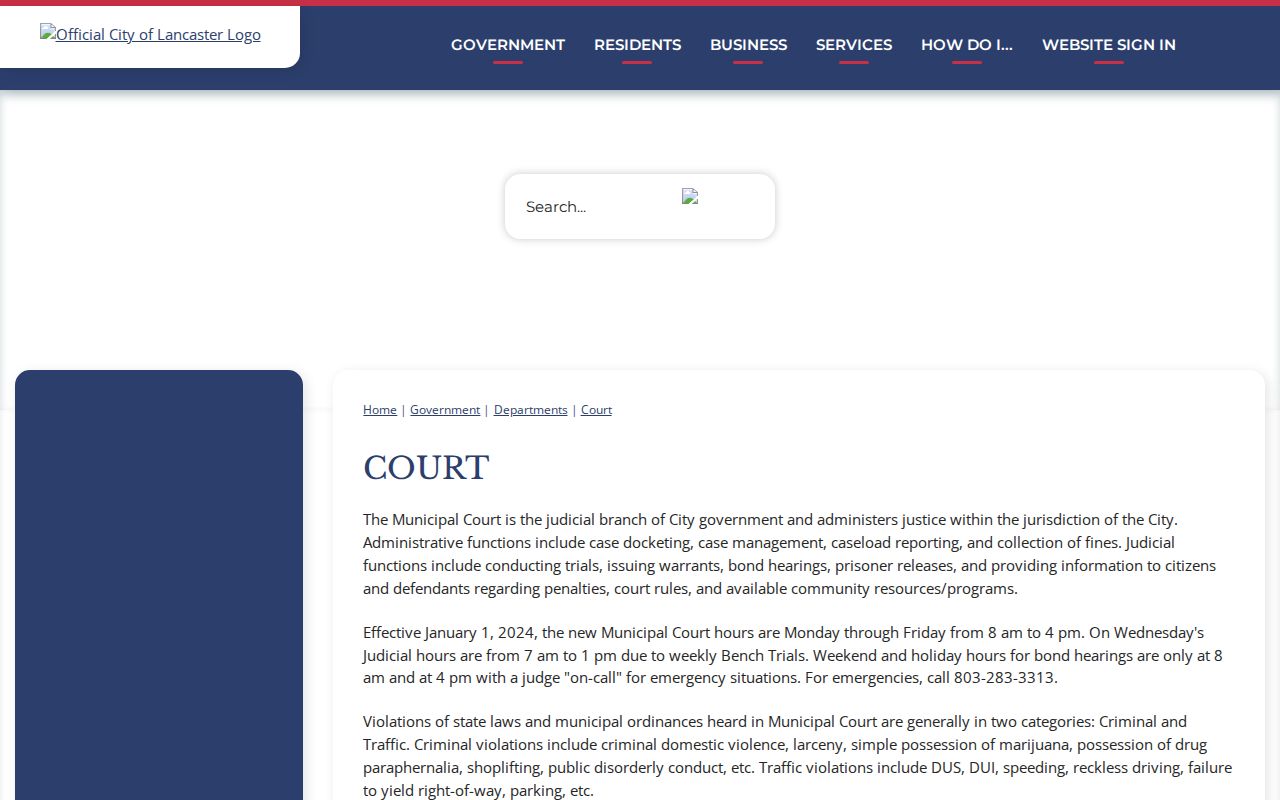
Payment instructions do not certify that a warrant has been recalled.
How to Resolve a Bench Warrant
Start with the issuing court, not the sheriff or a third-party lookup. For a Lancaster County summary-court case, Centralized Magistrate Court lists 803-283-3983, and Bond Court questions go to 803-416-9483 at the listed session times. A Lancaster city matter goes to Municipal Court instead. Ask whether a reset, appearance, bond, payment, or motion is required. A possible sequence is:
- Read the court and case number from the paper.
- Ask the issuing court for its current instructions.
- Speak with counsel about appearance, bond, or a recall motion.
- Keep a receipt, order, or written status confirmation.
Caution: Do not assume a bench warrant expired or that payment cleared it; confirm the current order and next step with the court.
Lancaster County Warrant Service Has a Return
The sheriff's Judicial Services unit serves arrest warrants and court orders across Lancaster County. State law describes the sheriff's duty to keep process records and make returns, and Rule 30 covers reasonable efforts to serve bench warrants. A return can say what happened. A short status label may not tell you whether the issuing court has actually closed the matter. Lancaster Police serves inside the city, while county law enforcement covers the rest. Review the City Police Department's official information for its role.
Open Lancaster Police’s official page.
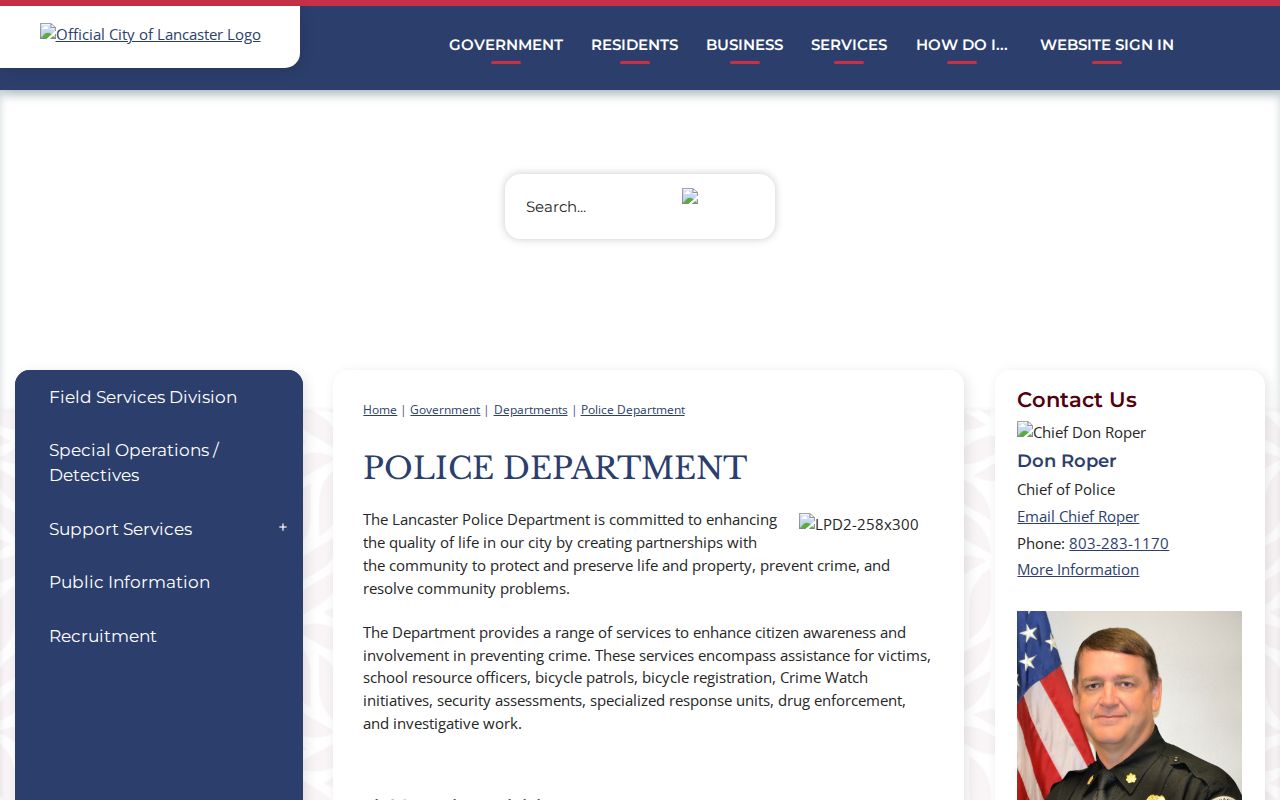
A service return is part of the record. It does not replace the issuing court's current direction on a Lancaster County warrant.
Which Lancaster County Court Issued It
Every bench warrant belongs to the court that opened the case, so start with the name printed on your notice. In Lancaster County, that splits a few ways. Centralized Magistrate Court handles county summary cases, while Lancaster Municipal Court takes city matters. Kershaw and Heath Springs each run their own courts. Family Court manages its own support process. Circuit Court and the Clerk of Court hold General Sessions and other Circuit records. Once you know the court, the state court directory confirms municipal contact details, and the county's Magistrate Court page posts its hours. For a fuller Lancaster County warrant lookup, see the Lancaster County warrant overview. Keep county and city schedules separate, since each court sets its own.
Open the state municipal-court directory.
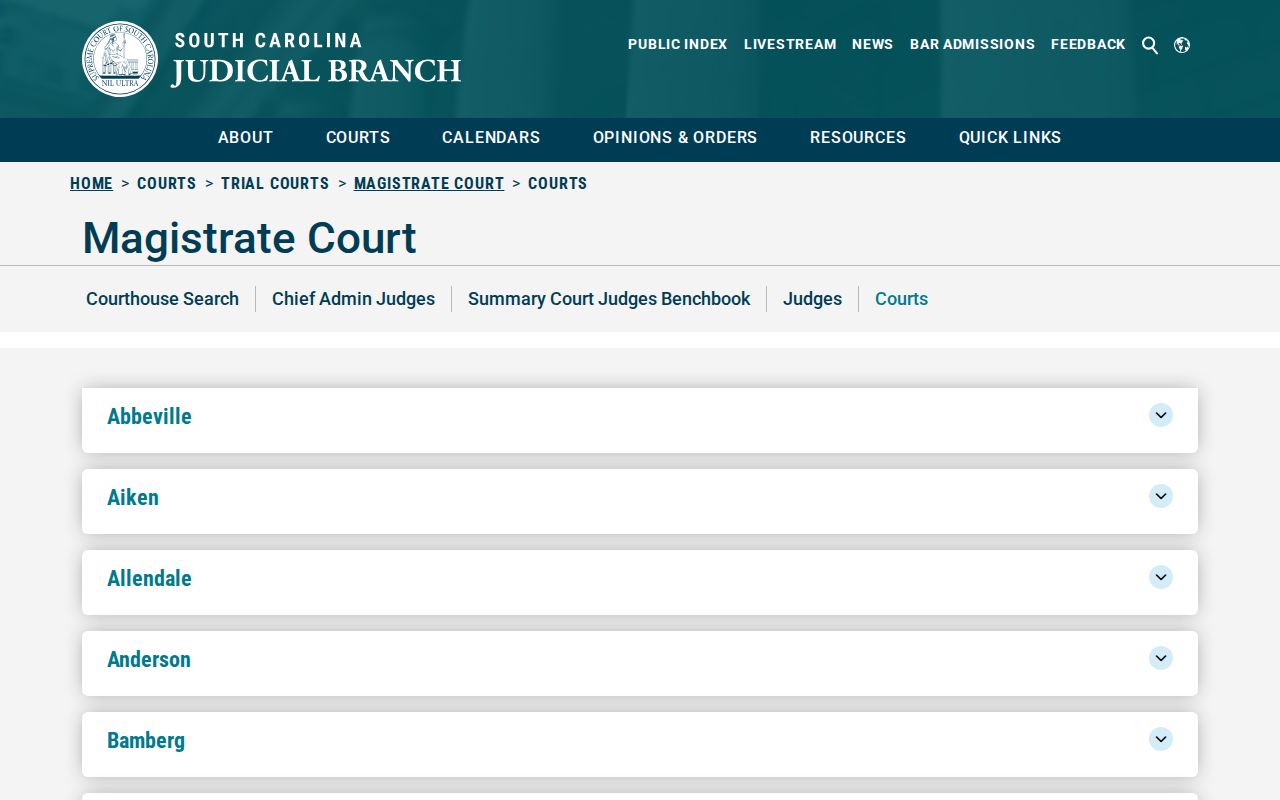
Use the listed court for its own file and instructions.